
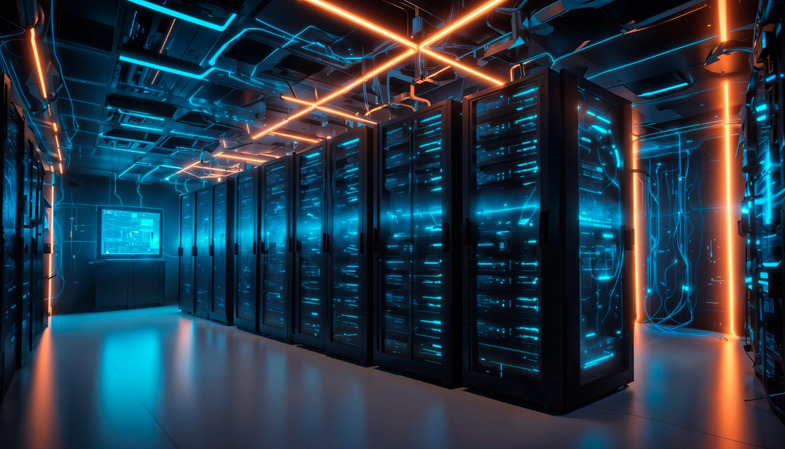
High-performance data centers are the backbone of modern digital infrastructure. They’re engineered to deliver uninterrupted service, scalable performance and operational resilience, all while managing immense energy loads and thermal output. At the heart of these facilities lie three critical pillars: power systems, data center cooling systems and exterior features that support both functionality and sustainability.
This blog examines how these components collaborate to facilitate robust IT infrastructure management.
Power: The Foundation of Reliability
Power systems in high-performance data centers are designed for redundancy, fault tolerance and seamless failover. With thousands of servers running simultaneously, even a momentary disruption can impact critical workloads, making power architecture a non-negotiable priority.
Utility and Backup Power
- Uninterruptible Power Supplies (UPS): Provide instant backup during outages, ensuring continuity while generators activate.
- Diesel Generators: Deliver sustained power during extended outages, often housed in acoustically treated enclosures.
- Switchgear and PDUs: Switchgear routes electricity from utilities or generators to equipment, while Power Distribution Units (PDUs) manage delivery to server racks.
These systems form a layered defense against downtime, supporting resilient IT infrastructure management across diverse environments.
Cooling: Precision Thermal Control
Servers generate significant heat and without effective data center cooling systems, performance degrades and hardware risks failure. Cooling is not just a support function; it’s a strategic enabler of density, efficiency and uptime.
Air-Based Cooling
- CRAH/CRAC Units: Circulate chilled air through raised floors and extract hot air via ceiling vents or containment aisles.
- Hot/Cold Aisle Containment: Separates airflow to reduce energy waste and improve cooling efficiency.
- Cool Array Fan Walls: Slab-mounted fan walls flood cold air across server rows, enhancing airflow control.
Liquid Cooling
- Direct-to-Chip Cooling: Circulates liquid directly to heat-generating components for superior thermal transfer.
- Rear Door Heat Exchangers: Absorb heat at the cabinet level before it enters the room.
Liquid cooling supports high-density deployments and is increasingly vital for AI and HPC workloads.
Chillers and Piping
- Chilled Water Systems: Central chillers cool water, which is pumped through insulated piping to CRAH units.
- Redundant Cooling Loops: Maintain uptime during maintenance or failure.
Efficiency is measured by Power Usage Effectiveness (PUE). Lower PUE means more energy goes to computing, not cooling. It is a key metric for sustainable IT infrastructure management.
Exterior Features: Design That Performs
The exterior of a data center plays a critical role in environmental efficiency, security and operational support.
Rooftop Infrastructure
- Solar Panels: Supplement grid power and support ESG goals.
- Ventilation Systems: Enable free cooling by exhausting hot air and drawing in ambient air.
- Green Roofs: Aid in insulation and promote biodiversity.
These features enhance sustainability and contribute to long-term energy stability.
Structural Design
- Reinforced Shells: Protect against natural disasters and electromagnetic interference.
- Flood and Fire Protection: Raised floors, drainage systems and gas-based suppression safeguard equipment.
- Perimeter Security: Includes fencing, biometric access and surveillance systems.
Exterior design supports uptime, compliance and physical resilience, all essential to enterprise-grade IT infrastructure management.
Integrated IT Infrastructure Management
Managing a high-performance data center requires intelligent orchestration across power, cooling and hardware systems.
DCIM Platforms
Data Center Infrastructure Management (DCIM) tools provide real-time visibility into energy usage, cooling performance and asset health.
- Energy Monitoring: Identifies inefficiencies and tracks consumption.
- Capacity Planning: Forecasts future power and cooling needs.
- Predictive Maintenance: Uses sensor data to anticipate failures.
DCIM bridges facilities and IT teams, enabling smarter decisions and faster response times.
Automation and AI
- AI-Driven Cooling Adjustments: Algorithms optimize airflow and temperature based on server load.
- Remote Management: Enables technicians to monitor and troubleshoot systems from anywhere.
- Digital Twins: Simulate infrastructure changes before physical implementation.
These capabilities elevate IT infrastructure management from a reactive to a proactive approach, which is essential for modern digital operations.
Final Thoughts
High-performance data centers are engineered ecosystems where power, cooling and exterior design converge to support mission-critical workloads. From UPS systems and liquid cooling to solar rooftops and DCIM platforms, every component plays a role in ensuring uptime, efficiency and scalability.
As digital demands grow, driven by AI, edge computing and hybrid cloud, investing in robust data center cooling systems and intelligent IT infrastructure management is no longer optional. It’s the foundation of digital resilience. That’s why providers like DC&T Global focus on designing and building infrastructure that delivers on performance, scalability, and long-term operational strength.
FAQs:
1. What is PUE and how does it impact data center efficiency?
Power Usage Effectiveness (PUE) measures how efficiently a data center uses energy. A lower PUE means more power is used for computing instead of cooling or support systems, improving sustainability and operational cost efficiency.
2. What is hot aisle and cold aisle containment?
It is an airflow management technique that separates hot and cold air paths. This improves cooling efficiency, reduces energy waste, and maintains consistent temperatures across server racks.
3. Why is integrated infrastructure planning important in high-performance data centers?
Power, cooling, and IT systems must work together. Integrated planning improves efficiency, reduces downtime risk, supports scalability, and enables smarter, proactive infrastructure management.
4. Can DC&T Global build data centers for AI and high-performance computing workloads?
Yes, DC&T Global engineers facilities with liquid cooling readiness, high-density power distribution, advanced airflow systems, and structural resilience, making them ideal for AI, cloud, and HPC environments requiring continuous uptime.
5. How does DC&T Global ensure reliable power infrastructure in data centers?
DC&T Global deploys redundant power architecture with UPS, diesel generators, intelligent switchgear, and advanced power distribution. This layered approach ensures seamless failover, zero-downtime operations, and consistent performance for IT infrastructure management.
6. What are data center cooling systems and why are they important?
Data center cooling systems control temperature and airflow to prevent server overheating. Efficient cooling improves hardware lifespan, reduces energy consumption, and ensures uninterrupted IT infrastructure management.