
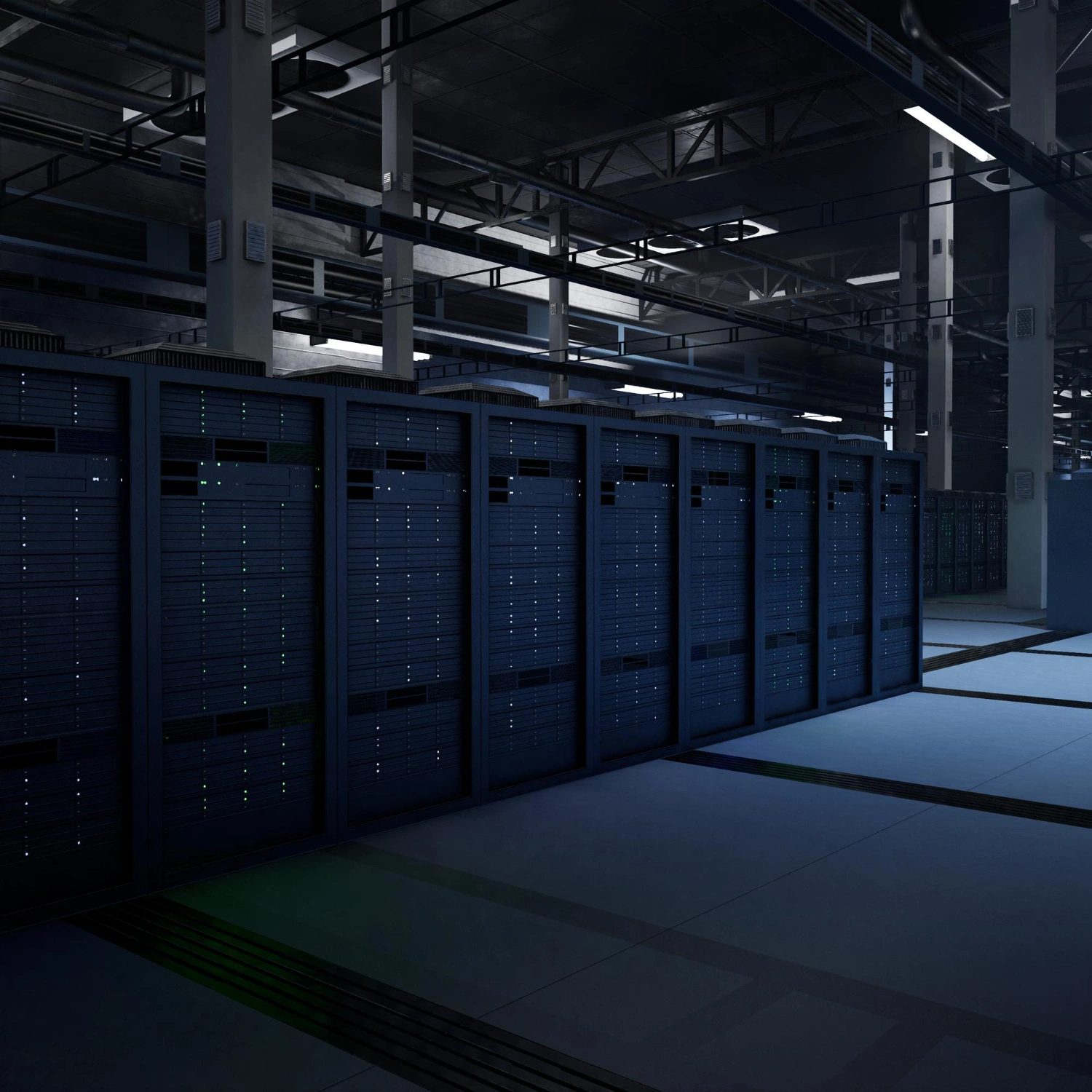
Data center investment in India is no longer just a growth story; it is a race between capital, capability, and execution.
In a remarkably short span, the country has moved from being a secondary consideration on the global data center map to one of its most aggressively pursued destinations. Cumulative investment commitments have crossed USD 126 billion, with USD 56.4 billion deployed in 2025 alone, numbers that place India alongside the world’s most mature infrastructure markets.
But the real story is not the scale of capital. It is the urgency behind it.
A convergence of regulatory mandates, geopolitical realignment, and AI-driven compute demand is compressing timelines for global hyperscalers. For companies like Amazon, Google, and Microsoft, India is no longer just a market to serve; it is becoming a strategic infrastructure base that must be built at speed, at scale, and with long-term resilience.
This blog examines what is driving data center investment in India, how foreign capital and policy frameworks are accelerating the buildout, and why the next phase of growth will be defined less by intent and more by execution.
Foreign Capital Is Driving the Build
Foreign direct investment has become the primary engine behind India’s data center buildout, but what stands out is the conviction and velocity with which capital is being deployed.
Between 2020 and April 2025, India attracted approximately USD 14.7 billion in data center investments, with foreign institutional investors contributing nearly 86% of the total, according to Houlihan Lokey’s December 2025 Real Estate Highlight report. This level of participation signals a clear shift: global capital no longer views India as an emerging opportunity; it is underwriting it as a core infrastructure market.
That shift became unmistakable in 2025.
Commitments from hyperscalers moved from incremental to aggressive. Microsoft announced investments of USD 17.5 billion, Amazon Web Services committed USD 35 billion, and Google pledged USD 15 billion, bringing the combined total from just three players to USD 67.5 billion. These are not exploratory allocations; they are long-horizon bets on sustained demand, regulatory alignment, and execution viability.
Importantly, this influx of foreign capital is not operating in isolation. Domestic players are scaling in parallel, creating a dual-engine growth model where global capital brings scale and discipline, while local developers contribute market familiarity, speed, and execution depth.
Policy support has reinforced this momentum in a decisive way.
FDI in data centers India: India currently permits 100% FDI in data centers under defined conditions, and the regulatory pathway has been progressively simplified. Institutional mechanisms such as the Data Center Industry Council have improved coordination between stakeholders, reducing friction in approvals and project development.
A particularly significant development is the Union Budget 2026–27 provision of a 20-year tax holiday, extending until 2047, for foreign cloud providers using India-based infrastructure to serve global markets. This introduces long-term fiscal visibility, which is arguably one of the most critical requirements for large-scale infrastructure investment, where payback periods are extended, and capital exposure is substantial.
The combined effect is a market where capital is not just entering, but anchoring itself.
For investors, India offers a rare combination: regulatory compulsion, demand visibility, cost advantage, and policy-backed incentives. For operators, it creates an environment where scale is achievable, but only for those who can deploy capital efficiently and execute with precision.
India Data Center FDI Policy: What Is Making It Happen
The policy environment around India’s data center ecosystem has undergone a deliberate and accelerated transformation over the past two years, one that is now directly shaping investment behavior at scale.
At the center of this shift is regulatory compulsion.
The Digital Personal Data Protection (DPDP) Act, 2023, along with the DPDP Rules notified in 2025, introduces a compliance timeline culminating in May 2027. These regulations require data linked to Indian users to be stored and processed within the country. The implication is structural: global platforms are no longer evaluating India as an optional infrastructure market; they are being pushed toward mandatory localization.
This changes the nature of demand from opportunistic to inevitable.
The Draft National Data Centre Policy 2025 builds on this momentum by aligning fiscal incentives with long-term capital deployment. It proposes up to 20 years of conditional tax exemptions, 100% electricity duty exemption, input tax credits on capital equipment such as HVAC and electrical systems, and single-window clearances. The introduction of Data Centre Economic Zones with pre-allocated land near IT corridors further reduces time-to-market for large-scale developments.
Crucially, the push toward granting infrastructure status is a defining lever. It enables access to long-tenure, lower-cost financing, an essential requirement for an asset class where upfront capital intensity is high, and returns are realized over extended horizons.
What makes India’s approach particularly effective is the layering of national intent with state-level execution.
States including Maharashtra, Karnataka, Telangana, Tamil Nadu, Uttar Pradesh, Rajasthan, West Bengal, and Haryana have introduced targeted policies offering land subsidies, stamp duty exemptions, and power tariff concessions. This has created a competitive federal environment, where they are enabling development and actively competing to attract it.
The result is a geographically distributed investment pipeline, rather than a concentration in a single dominant hub, a critical advantage for long-term resilience, latency optimization, and risk diversification across the network.
Data Center Investment Opportunities India
The growth in India’s data center capacity over the past 18 months has been significant by any measure. Operational IT load capacity stood at approximately 1.3 GW as of H1 2025, according to Cushman & Wakefield’s India Data Centre Update, and reached 1.53 GW by Q3 2025 per CBRE’s India Data Centre Market report. This represents a 48% year-on-year increase in net absorption in H1 2025 alone, with 97.9 MW of new take-up recorded.
The pipeline is even more consequential. Cushman & Wakefield projects an additional 2.9 GW of supply expected by 2030. JLL’s India Data Centre Market Dynamics Report H1 2025 forecasts total capacity reaching 2,073 MW by the end of 2027, an 85% increase from current levels, requiring approximately 10.7 million square feet of real estate. PwC’s January 2026 report estimates India’s capacity could reach 14 GW by 2035, growing at a CAGR of 20–24%.
From a market valuation perspective, the India data center market is valued at approximately USD 10.48 billion in 2025 and projected to reach USD 27.2 billion by 2032, growing at a CAGR of 14.6%, per MarkNtel Advisors.
Data center investment opportunities in India are not confined to the established metros. While Mumbai commands the largest share of capacity, Mumbai’s under-construction capacity now ranks 6th globally, surpassing London and Dublin, per Cushman & Wakefield’s Global Data Center Market Comparison 2025. The growth frontier is shifting. Visakhapatnam is emerging as Google’s largest global data hub. Hyderabad, Chennai, Delhi-NCR, and Bengaluru are all registering accelerated activity. Tier-2 cities, including Ahmedabad, Kochi, Pune, and Kolkata, are attracting investment driven by lower land costs, improving connectivity, and supportive state incentives.
Between 2019 and Q3 2025, India secured nearly USD 94 billion in investment commitments from global and domestic players, with Telangana, Maharashtra, Tamil Nadu, Uttar Pradesh, West Bengal, and Karnataka together accounting for about 45% of this capital, according to CBRE.
Hyperscale Data Centers in India
The character of demand driving hyperscale data centers in India has shifted fundamentally. Where enterprise colocation once defined the market, hyperscalers are now reshaping it in their own image, and the scale requirements are orders of magnitude larger than what the sector was built for.
Demand for enterprise-driven capacity once rarely exceeded 10 MW. With hyperscalers, the requirement has risen to 25–50 MW per deployment. With AI workloads, this is projected to climb further to 75–100 MW. This shift has structural consequences: facilities must be engineered with AI-ready power density, advanced cooling infrastructure, including direct-to-chip and immersion liquid cooling, and redundant power systems capable of supporting continuous compute loads.
OpenAI announced plans for a 1 GW data center in India. Google is planning a 1 GW facility in Andhra Pradesh. These are not incremental expansions; they represent a new category of infrastructure asset requiring precision engineering from the ground up.
The AI dimension adds another layer. Generative AI is projected to add USD 1.2 to 1.5 trillion to India’s GDP by 2030, which will drive demand for GPU-dense deployments and require data centers designed with significantly higher power and cooling density than conventional cloud facilities.
India’s structural cost advantage underpins this growth. Construction costs in Mumbai are estimated at USD 6.64 per watt, which is well below comparable markets in the US and China. This 30–40% cost advantage is structural and durable, making India one of the most economically compelling locations globally for large-scale data center development.
Data Center Growth in India & the Constraints That Will Define It
India’s data center expansion is accelerating at an unprecedented pace, but the next phase of growth will not be determined by capital or intent alone. It will be shaped by how effectively a set of structural constraints is addressed.
Power is the most immediate and consequential of these.
Data center power demand is projected to rise from 1.5 GW in 2025 to between 8 and 13.5 GW by 2030–32, potentially accounting for 2–8% of India’s total electricity consumption. This is a systems-level challenge and not just one of scale. Grid interconnection delays already act as a bottleneck, and the dependence on diesel generator backups means that every 100 MW campus effectively carries the footprint of a captive power plant. As emission norms tighten, this model becomes both economically and environmentally unsustainable.
What this creates is a clear inflection point: the ability to secure reliable, scalable, and cleaner power will increasingly determine where and how fast capacity can be added.
Renewable energy is therefore not a parallel consideration; it is becoming a prerequisite.
Global hyperscalers operate under 100% renewable energy commitments, which means that every facility must be backed by credible clean energy pathways. India’s target of 500 GW of non-fossil fuel capacity by 2030 creates alignment at a national level, but execution remains complex. Long-term power purchase agreements, grid integration, and storage solutions such as BESS will play a critical role in bridging this gap.
Water dependency introduces another layer of constraint.
Consumption is projected to rise from 150 billion litres in 2025 to 358 billion litres by 2030. In a country already facing regional water stress, this raises questions around long-term sustainability, particularly for large hyperscale campuses. Technologies such as liquid cooling and zero-water systems are gaining traction, but adoption at scale is still evolving, and their deployment will be closely tied to cost, location, and regulatory pressure.
Talent, while less immediate, is no less critical.
The sector is expected to face a shortfall of approximately 2.3 million skilled professionals by 2027. Unlike traditional infrastructure, data centers require a convergence of expertise across electrical systems, cooling technologies, digital infrastructure, and operations. Bridging this gap will require sustained investment in training, specialization, and ecosystem development.
Taken together, these are not peripheral challenges; they are defining constraints.
How they are addressed will determine not just the pace of India’s data center growth, but its structure. Markets that solve for power access, sustainability, and talent at scale will emerge as long-term hubs. Those that do not may struggle to convert investment intent into operational capacity.
DC&T Global Perspective
At DC&T Global, from a build and execution standpoint, what stands out is not just the scale of investment, but the increasing complexity of building at that scale.
The transition from sub-10 MW enterprise facilities to 100 MW hyperscale campuses and increasingly toward gigawatt-scale AI infrastructure marks a fundamental redefinition of this asset class. These are no longer conventional builds. They require precision-engineered power systems, high-density cooling architectures, and structural design capable of supporting unprecedented compute loads.
At the same time, timelines are tightening. Hyperscalers are operating on aggressive commissioning schedules, where delays are not just operational setbacks but direct revenue losses. In this environment, execution is no longer a downstream function; it is the determining factor of value creation.
India has the capital, the policy alignment, and the demand to become one of the world’s most important data center markets. The differentiator now lies in how effectively that ambition is translated into operational capacity.
The next decade will not be defined by how much is announced, but by how much is delivered.
FAQs: Data Center Investment in India
1. What is driving the surge in data center investment in India?
The surge is being driven by a combination of regulatory mandates, hyperscaler expansion, and rising digital demand. Data localization requirements under the DPDP framework are pushing global platforms to build locally, while AI workloads are significantly increasing compute needs. At the same time, India offers a structural cost advantage and a rapidly growing user base, making it a high-priority market for long-term infrastructure investment.
2. How does FDI influence data center growth in India?
FDI plays a central role in scaling India’s data center ecosystem. A significant share of total investment comes from foreign institutional investors and global hyperscalers, bringing not just capital but also operational expertise and global standards. With 100% FDI permitted and supportive policies in place, India has become a core market for international data center investment rather than a secondary destination.
3. What policies support data center investment in India?
India’s policy framework includes the Digital Personal Data Protection (DPDP) Act, the Draft National Data Centre Policy, and multiple state-level incentives. These policies offer benefits such as tax exemptions, infrastructure status, subsidized land, and power incentives. Together, they create a favorable environment by reducing entry barriers, improving project viability, and accelerating time-to-market for developers.
4. What are the biggest challenges facing data center growth in India?
The primary challenges include power availability, renewable energy integration, water usage, and skilled talent shortages. As demand scales rapidly, access to reliable and sustainable power is becoming a critical constraint. Additionally, environmental considerations and the need for specialized expertise are shaping how and where new data center capacity can be developed.
5. What are the key data center investment opportunities in India?
Opportunities extend beyond established hubs like Mumbai and are expanding into cities such as Hyderabad, Chennai, and emerging Tier-2 markets. Growth areas include hyperscale facilities, AI-ready infrastructure, renewable energy integration, and edge data centers. As demand diversifies geographically and technologically, investors and developers have multiple entry points across the value chain.
6. What does DC&T Global do in the data center sector?
DC&T Global is an EPC (Engineering, Procurement, and Construction) company with data centers as one of its flagship verticals. The company provides end-to-end design and build services for data center infrastructure, covering civil and structural works, MEP systems, power infrastructure, cooling systems, and specialist commissioning, delivering facilities built to the technical standards demanded by global hyperscalers and enterprise operators.
7. How does DC&T Global’s EPC capability align with India’s data center growth?
India’s data center buildout requires construction partners capable of delivering AI-ready, high-density facilities at pace and scale. DC&T Global’s EPC expertise spans the full delivery lifecycle, from site preparation and structural construction through to critical systems integration, making the company well-positioned to support the wave of hyperscale and enterprise data center development unfolding across India’s major and emerging markets.
Source:
- MarkNtel Advisors, India Data Center Market Report
- Resi India Strategic Analysis
- Turner & Townsend, Data Centre Construction Cost Index 2025–26
- CNBC Inside India Newsletter
- Houlihan Lokey, Real Estate Highlight Data Center India Edition
- Cushman & Wakefield, Global Data Center Market Comparison 2025
- CBRE, India’s Data Centre Market in a New Era
- JLL, India Data Centre Market Dynamics H1 2025
- PwC, Transforming India into a Trusted Global Data Hub
- Mondaq, India Data Centre Sector Legal and Investment Perspective
- Inc42, Why 2025 Became India’s Breakout Year for Global Data Centres