
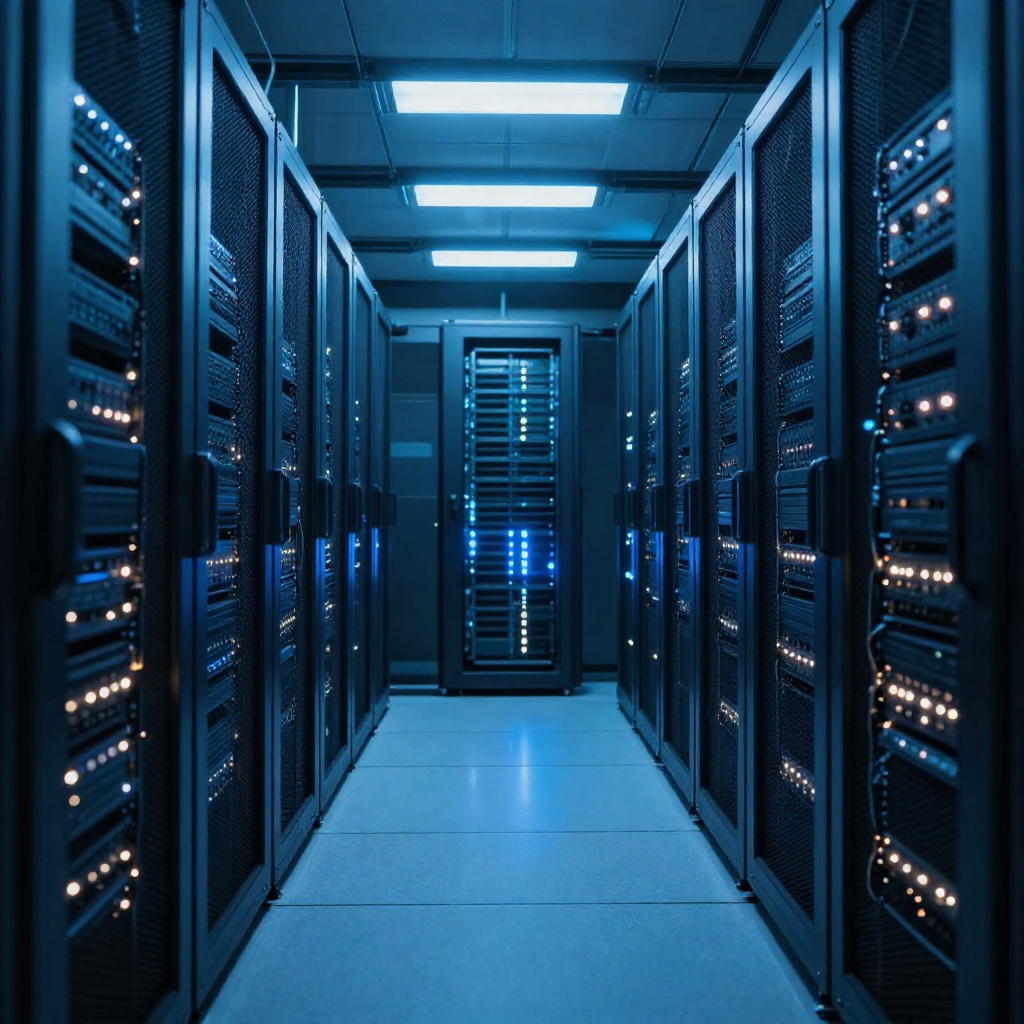
The rapid rise of artificial intelligence is more than just a software revolution. It is fundamentally an infrastructure challenge. At the center of this shift is the AI data center, which is a new class of digital infrastructure engineered to support the extreme compute, power and thermal demands of modern AI workloads.
What makes this moment different, is scale. AI models are expanding exponentially, inference is moving closer to users and enterprises are embedding AI into mission-critical operations. This is forcing a complete rethink of AI infrastructure, giving rise to highly specialized AI powered data centers that prioritize density, efficiency and resilience. At the same time, the expansion of the edge data center is decentralizing compute, while the role of AI in data centers is evolving from workload execution to operational intelligence. Underpinning all of this is the rapid adoption of automation in data centers, enabling systems to manage complexity at scale.
2026 marks the point where these shifts converge, where infrastructure limitations begin to define the pace of AI innovation.
What is an AI Data Center?
An AI-ready data center is a purpose-built facility designed to support artificial intelligence workloads using high-performance computing systems such as GPUs and AI accelerators, advanced cooling technologies and high-capacity power infrastructure. Unlike traditional setups, AI powered data centers operate at significantly higher rack densities and increasingly leverage the role of AI in data centers to autonomously optimize performance, energy consumption and system reliability.
Why 2026 is a Defining Year for AI-ready Infrastructure
The scale of transformation is being driven by both demand and constraint. McKinsey & Company estimates AI-driven data center demand is growing at over 30% annually. Meanwhile, the International Energy Agency highlights that AI could significantly increase global electricity demand over the next decade.
At the same time, capital deployment is accelerating. Reuters reports that AI-driven investments in data center infrastructure are accelerating rapidly, even as supply constraints and limited capacity pose challenges to expansion.
This imbalance is forcing a shift from incremental upgrades to fundamentally new design paradigms.
Top 10 AI Data Center Trends of 2026
1. From kW to MW: The Rise of Ultra-High-Density AI Compute Clusters
AI workloads are pushing compute density into a new regime. While legacy enterprise racks operated at 5–10 kW, modern AI racks are routinely exceeding 50–100 kW, with hyperscale clusters reaching multi-megawatt deployments within a single data hall.
This is driven by GPU-heavy architectures (e.g., multi-node AI training clusters) that require:
- High power distribution (415V/480V architectures)
- Busway-based power systems instead of traditional PDUs
- Ultra-low latency interconnects within dense clusters
Design is shifting from “row-based layouts” to cluster-based architectures, where compute, cooling and networking are co-optimized.
Impact on Infrastructure & Business
- Structural engineering must support higher floor loads (often >1500 kg per rack)
- Failure domains become larger — resilience design must evolve
- Capex per MW increases, but compute output per sq. ft. improves significantly
For enterprises, density becomes a performance multiplier, but also a risk amplifier.
2. Liquid Cooling Architectures Move from Optional to Foundational
Air cooling becomes thermodynamically insufficient beyond ~30–40 kW per rack. As a result, liquid cooling is now central to AI powered data centers.
Key architectures include:
- Direct-to-chip cooling (cold plates for CPUs/GPUs)
- Rear-door heat exchangers
- Immersion cooling (single-phase & two-phase systems)
These systems can dissipate heat loads exceeding 100 kW per rack efficiently, while reducing reliance on traditional CRAC/CRAH units.
However, EPC integration becomes more complex:
- Leak detection systems
- Coolant distribution units (CDUs)
- Secondary loop design and redundancy
Impact on Infrastructure & Sustainability
- Cooling shifts from air management to thermal fluid engineering
- Water usage and coolant lifecycle management become critical
- Retrofitting legacy facilities becomes cost-intensive
Cooling is no longer a subsystem; it is a core engineering discipline shaping AI infrastructure viability.
3. Grid-to-Chip Power Engineering Becomes the Critical Path
Power is emerging as the primary bottleneck in modern data center expansion for AI.
According to Goldman Sachs, data center electricity demand could rise by over ~165% by 2030. The International Energy Agency reinforces that AI workloads are a major driver of this surge.
To meet demand, power architectures are evolving:
- Transition to high-voltage distribution (MV/LV optimization)
- Deployment of on-site substations (100–500 MW scale)
- Integration of BESS for load balancing and backup
- Hybrid energy models combining grid + renewables
Impact on Site Selection & Scalability
- Power availability now dictates site viability
- Time-to-power becomes a key project risk
- Energy strategy becomes embedded in EPC planning
AI-ready infrastructure is no longer constrained by compute; it is constrained by electrons.
4. Autonomous Operations: Automation in Data Centers at Scale
The complexity of AI environments makes manual operations unsustainable. Automation in data centers is evolving into fully autonomous operational frameworks.
Capabilities now include:
- AI-driven DCIM systems
- Predictive failure analysis using telemetry data
- Autonomous workload orchestration
- Real-time thermal and power optimization
Facilities are increasingly operating as self-regulating systems, reducing human intervention while improving efficiency.
Impact on Operations & Cost
- Reduced operational expenditure (OPEX)
- Improved uptime and SLA compliance
- Need for new skill sets (AI + infrastructure integration)
Operations shift from reactive management to predictive intelligence-driven control.
5. AI as the Control Layer: Redefining the Role of AI in Data Centers
The role of AI in data centers is expanding beyond compute execution into infrastructure control.
AI is now used to:
- Optimize cooling setpoints dynamically
- Predict power demand spikes
- Balance workloads across clusters
- Simulate infrastructure performance using digital twins
This creates a feedback loop where AI systems continuously improve infrastructure efficiency.
Impact on Performance & Efficiency
- Energy savings through real-time optimization
- Reduced downtime through predictive insights
- Transition toward self-healing infrastructure systems
Modern data centers for AI workloads are becoming intelligent environments, not just compute facilities.
6. Distributed Intelligence: The Expansion of Edge Data Center Networks
The rise of latency-sensitive AI applications is accelerating the deployment of edge data center infrastructure.
Unlike centralized hyperscale facilities, edge data centers are:
- Smaller (1–20 MW typical range)
- Geographically distributed
- Optimized for inference workloads
They support applications such as:
- Autonomous systems
- Industrial AI
- Real-time analytics
Impact on Architecture Strategy
- Hybrid models (core + edge) become standard
- Increased complexity in network orchestration
- Greater emphasis on modular deployment
AI-ready infrastructure is shifting from centralized to distributed intelligence networks.
7. Factory-Built Infrastructure: Modular EPC Delivery Models Take Over
Speed-to-market is becoming critical. Traditional construction timelines (24–36 months) are incompatible with AI demand cycles.
This is driving adoption of:
- Prefabricated power modules
- Skid-mounted cooling systems
- Containerized data center units
EPC models are evolving toward factory-built, site-assembled infrastructure.
Impact on Delivery & Scalability
- Deployment timelines reduced by 30–50%
- Improved quality through controlled manufacturing
- Scalable expansion aligned with demand growth
Infrastructure delivery becomes industrialized, not just constructed.
8. Energy-Water Nexus: Sustainability Constraints Reshape Design Priorities
Sustainability is emerging as a critical factor shaping how future-ready data centers are designed and deployed.
As compute density rises, the growing interdependence between energy consumption and water usage is placing new constraints on infrastructure planning, requiring a more integrated and resource-aware approach.
McKinsey & Company highlights that data centers could account for a significant share of global electricity demand, while water usage for cooling is also under scrutiny.
Key focus areas include:
- PUE and WUE optimization
- Renewable energy integration
- Water-efficient cooling technologies
Impact on Long-Term Viability
- Regulatory pressure increases
- Site selection influenced by water availability
- Sustainability becomes a competitive differentiator
AI infrastructure must balance performance with environmental responsibility.
9. AI-Optimized Network Fabrics Replace Traditional Architectures
AI workloads generate massive east-west traffic within data centers. Traditional network architectures are insufficient.
Emerging solutions include:
- High-speed interconnects (400G/800G)
- RDMA-based communication
- Spine-leaf architectures optimized for AI clusters
These enable ultra-low latency communication between GPUs and compute nodes.
Impact on Performance
- Faster model training times
- Improved cluster efficiency
- Increased network cost as a share of total infrastructure
Networking becomes a core performance driver, not a supporting layer.
10. Resilience Engineering for Always-On AI Infrastructure
AI workloads are increasingly mission-critical, requiring near-zero downtime.
This is driving advancements in:
- Redundant power architectures (2N, N+1 at scale)
- Fault-tolerant system design
- Integrated physical + cybersecurity frameworks
Impact on Risk & Reliability
- Higher capital cost for redundancy
- Increased complexity in system integration
- Greater focus on lifecycle reliability
Resilience is no longer optional; it is foundational to AI-ready infrastructure trust.
What These Trends Mean for Businesses: From IT Decisions to Strategic Infrastructure Bets
The evolution of the AI supporting data center is evolving more than a backend concern. It is becoming a core business decision that directly impacts growth, competitiveness and long-term viability.
What organizations are facing in 2026 is not just a technology upgrade, but a series of high-stakes infrastructure bets.
1. Infrastructure Strategy Becomes a Competitive Differentiator
The shift from AI experimentation to enterprise deployment is placing infrastructure strategy at the core of decision-making.
Organizations are now required to define how infrastructure will support sustained performance, scale and cost efficiency. These decisions directly influence long-term flexibility and competitive positioning.
Organizations must evaluate:
- Build vs lease vs hybrid models based on control, speed and capital allocation
- Dependency on hyperscalers vs owning critical AI-ready infrastructure
- Long-term scalability aligned with AI roadmap maturity
The wrong decision here can lock businesses into cost structures or capacity limitations that are difficult to reverse.
2. Power Access Becomes a Growth Constraint
AI scaling is now directly tied to energy availability.
This shifts energy from an operational cost to a strategic resource, forcing businesses to:
- Secure long-term power through PPAs or dedicated capacity
- Evaluate regions based on power availability, not just connectivity
- Integrate energy planning into infrastructure decisions
In many cases, the ability to scale AI will depend less on capital and more on access to megawatts.
3. Latency and Location Shape Digital Experience
With the rise of the edge data center, infrastructure location is becoming tightly linked to user experience and application performance.
Businesses must rethink:
- Where inference workloads should run (edge vs core)
- How to balance centralized efficiency with distributed responsiveness
- Network architecture required to support hybrid deployments
This is especially critical for industries where real-time processing is non-negotiable.
4. Engineering Complexity Demands Integrated Execution
Now a days, AI-ready infrastructure operates as a tightly coupled system where every layer influences performance.
Compute density impacts:
- Cooling architecture
- Power distribution
- Structural design
- Network performance
This makes fragmented execution risky. Organizations increasingly require integrated EPC capabilities to ensure systems are designed and delivered as a cohesive whole. Deploying AI infrastructure requires careful planning and precise execution of complex, interdependent systems. Working with proven EPC services for data centers helps ensure smooth implementation, reduced risk, and alignment across design, engineering, and deployment phases.
5. Cost Structures Shift from Linear to Exponential
As AI workloads scale, cost structures become increasingly non-linear and harder to predict.
Rising compute density places disproportionate pressure on cooling, power and redundancy systems, shifting the focus from upfront investment to long-term cost efficiency.
As density increases:
- Cooling costs rise disproportionately
- Power infrastructure requires heavy upfront investment
- Redundancy and resilience add complexity
This forces a shift toward:
- Lifecycle cost optimization, not just capex minimization
- Phased deployment strategies aligned with demand
- Higher emphasis on efficiency metrics (PUE, utilization rates)
6. AI Readiness Becomes Infrastructure Readiness
Ultimately, as AI deployments expand, infrastructure readiness becomes the determining factor in execution and continuity.
Organizations that invest early in:
- Scalable AI-ready infrastructure
- Energy-secure environments
- High-density, future-ready designs
will be positioned to move faster, operate more efficiently and adapt to evolving AI demands.
Those who don’t may find themselves constrained and not by ambition, but by physical limitations.
In 2026, infrastructure has evolved into a strategic enabler of AI-driven growth, moving beyond its traditional role as a support function.
The question for businesses is no longer “Should we invest in AI?”
It is “Are we ready to build the infrastructure that AI demands?”
Engineering the Future: DC&T Global’s Role in High-Performance Data Centers
Building infrastructure for AI workloads demands a level of engineering precision that goes beyond conventional data center delivery. As compute density rises and systems become more interdependent, execution quality directly influences performance, efficiency and long-term reliability.
DC&T Global operates as a full-spectrum EPC partner, delivering high-performing data centers through an integrated approach that aligns engineering, procurement and construction from the ground up.
Our capabilities span across:
- High-density compute environments (50–100 kW+ rack configurations)
- Advanced cooling integration, including liquid cooling architectures
- Grid-to-chip power engineering, including substation design and BESS integration
- Modular and prefabricated infrastructure for accelerated deployment
In addition to large-scale facilities, DC&T Global delivers both brick-and-mortar data centers and prefabricated edge data center solutions, enabling flexible deployment across centralized and distributed environments.
This integrated approach ensures that infrastructure is engineered as a cohesive system, where compute, cooling, power and network are designed to perform together under sustained load.
In a landscape where timelines are compressed and performance margins are narrow, execution capability becomes a defining factor. Precision in delivery, coordination across systems and readiness for scale ultimately determine how well infrastructure performs in real-world conditions.
Conclusion: From Data Centers to Intelligent Infrastructure Ecosystems
AI infrastructure is entering a phase where performance depends on how well systems are designed to operate under sustained scale and complexity. Data centers are evolving into tightly integrated environments where compute, cooling, power, and network must function as a unified system.
As 2026 progresses, increasing compute density, constrained power availability, automation, and distributed architectures are reshaping how infrastructure is planned, engineered, and deployed. These factors are driving a move toward more adaptive, high-efficiency environments built for continuous optimization.
Organizations that align their infrastructure with these shifts will be better positioned to scale AI reliably, manage costs effectively, and respond to changing workload demands with greater agility.
FAQs
1. How is an AI data center different in design from a traditional data center?
An AI data center is designed for significantly higher rack densities (often 50–100 kW+), requiring liquid cooling systems, high-capacity power distribution,and low-latency network fabrics. Unlike traditional facilities, design is cluster-based rather than row-based, with compute, cooling and power engineered as an integrated system.
2. What power capacity is required to support large-scale AI workloads?
Large-scale AI-ready data centers typically operate in the 50 MW to 500 MW range, depending on workload intensity. Individual AI clusters can consume multiple megawatts, making grid access, on-site substations and energy storage systems critical for scalability.
3. When should enterprises consider liquid cooling over air cooling?
Liquid cooling becomes necessary when rack densities exceed ~30–40 kW. At higher densities, air cooling cannot efficiently dissipate heat, leading to performance risks and inefficiencies. AI workloads involving GPU clusters almost always require direct-to-chip or immersion cooling solutions.
4. How do edge data centers fit into overall AI infrastructure strategy?
Edge data centers support latency-sensitive inference workloads by processing data closer to the source. They complement centralized hyperscale facilities by reducing latency, improving response times and enabling real-time applications such as industrial automation and autonomous systems.
5. How does DC&T Global address power and cooling challenges in high performing data center projects?
DC&T Global integrates grid-to-chip power engineering with advanced cooling architectures, including liquid cooling systems and energy storage solutions. This ensures that high-density AI workloads are supported with reliable, scalable and energy-efficient infrastructure.
6. What makes DC&T Global suitable for high-density AI-ready data center EPC execution?
DC&T Global combines expertise in high-density design, modular construction and integrated EPC delivery. This enables faster deployment, optimized performance and seamless coordination across power, cooling and compute infrastructure which is critical for modern AI environments.
Sources:
Goldman Sachs’ analysis on rising AI-driven power demand
McKinsey’s insights on powering and cooling AI-ready data centers
Reuters coverage of accelerating data center investments
McKinsey’s perspective on expanding data center capacity due to AI