
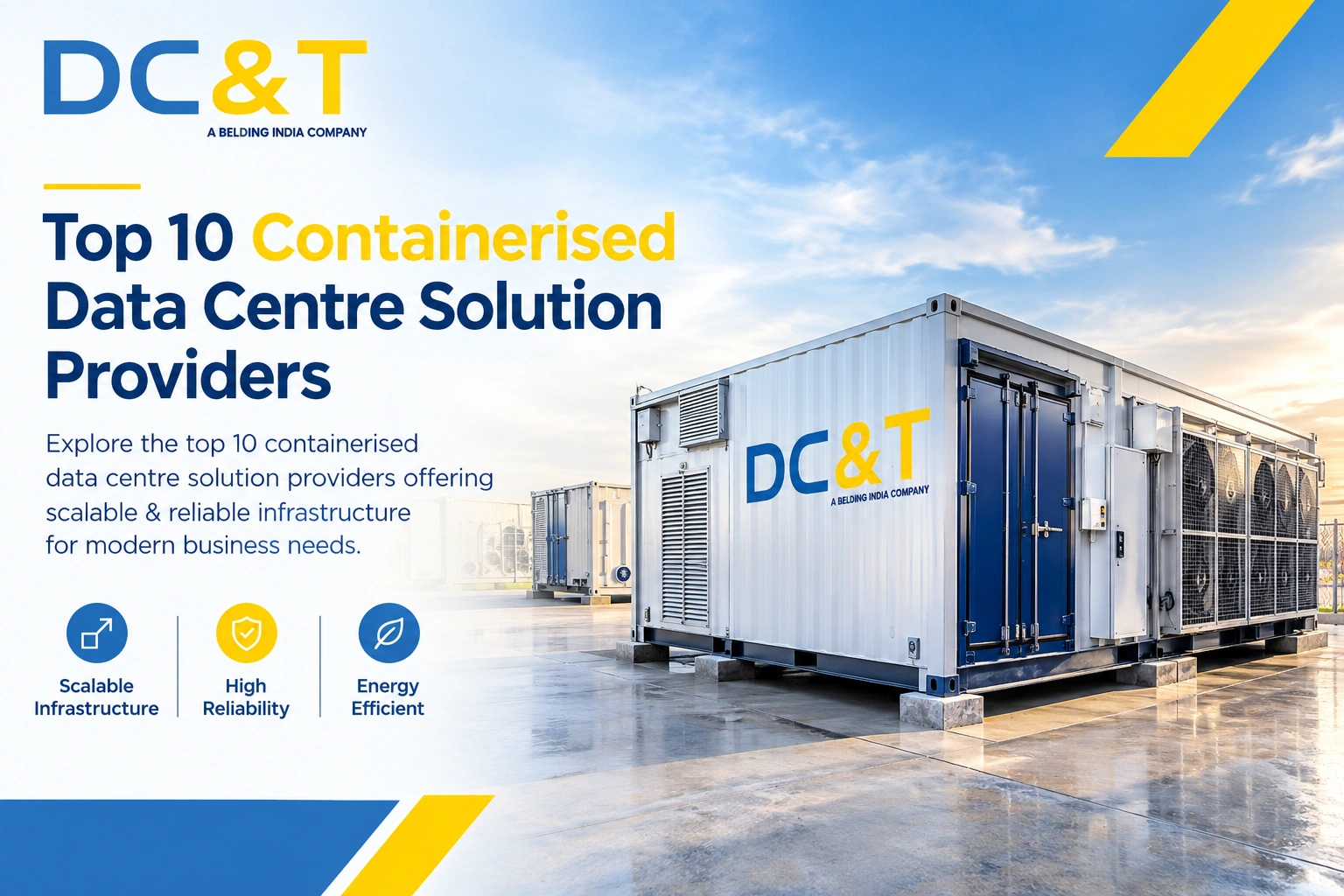
As businesses expand their digital operations, the demand for computing infrastructure that can be deployed across different locations continues to grow. Traditional data centre construction often involves extensive site work, multiple contractors and complex installation schedules.
Containerised data centres offer an alternative by bringing IT equipment and supporting infrastructure into engineered, transportable enclosures. Depending on the configuration, these systems can integrate racks, power distribution, cooling, fire detection and monitoring before reaching the deployment site.
However, providers differ in their engineering capabilities, manufacturing models, integration scope and deployment offerings. Understanding these differences can help businesses identify solutions that match their technical and operational requirements.
This article examines ten companies offering containerised or prefabricated data centre solutions, their capabilities and the factors to consider when evaluating a provider.
How Were These Providers Selected?
The companies in this list were selected based on their publicly documented modular or containerised data centre offerings.
The selection considers:
- Availability of containerised or prefabricated data centre solutions
- Integration of IT, power and cooling systems
- Engineering and system integration capabilities
- Deployment flexibility and scalability
- Relevance to enterprise, edge and distributed computing applications
The list is an editorial selection, not an independently verified ranking by market share or technical performance.
Top 10 Containerised Data Centre Providers
1. Vertiv
Vertiv provides critical digital infrastructure solutions, including prefabricated modular data centres that integrate IT space with supporting power and cooling systems.
Its portfolio covers different configurations for enterprise, edge and larger data centre deployments.
Key capabilities:
- Prefabricated modular data centre systems
- Power distribution and backup infrastructure
- Thermal management
- Integrated infrastructure configurations
- Scalable deployment options
Suitable applications: Enterprise computing, edge deployments and data centre capacity expansion.
2. Schneider Electric
Schneider Electric offers prefabricated data centre modules and integrated infrastructure solutions designed to bring together IT equipment, power and cooling.
Its portfolio includes prefabricated IT modules and power modules that can support different project configurations.
Key capabilities:
- Prefabricated IT modules
- Power distribution systems
- Cooling integration
- Modular power infrastructure
- Infrastructure monitoring and management
Suitable applications: Enterprise data centres, modular capacity expansion and distributed IT infrastructure.
3. Delta Electronics
Delta Electronics offers containerised data centre solutions that combine IT equipment with supporting electrical and cooling infrastructure.
Its data centre portfolio includes UPS systems, power distribution, cooling, racks and monitoring solutions.
Key capabilities:
- Containerised data centre configurations
- UPS and power distribution
- Precision cooling
- IT rack infrastructure
- Data Centre Infrastructure Management (DCIM)
Suitable applications: Edge computing, telecommunications, enterprise IT and distributed computing.
4. Rittal
Rittal provides modular IT infrastructure, including container-housed data centre configurations. Its solutions include different arrangements for IT equipment and supporting power infrastructure.
The modular approach allows infrastructure functions to be organised into dedicated enclosures or integrated configurations according to project requirements.
Key capabilities:
- Container-housed data centre solutions
- IT enclosures and rack systems
- Power infrastructure
- Cooling integration
- Modular configurations
Suitable applications: Enterprise IT, edge computing and modular data centre deployments.
5. Eaton
Eaton offers modular data centre solutions alongside its power management portfolio. Its prefabricated configurations can combine electrical infrastructure, IT equipment and cooling within engineered enclosures.
Key capabilities:
- Prefabricated modular enclosures
- UPS and battery infrastructure
- Electrical distribution
- Cooling and HVAC integration
- Configurable infrastructure packages
Suitable applications: Edge infrastructure, distributed IT environments and data centre capacity expansion.
6. Huawei
Huawei offers modular data centre solutions through its FusionModule portfolio. These solutions integrate IT cabinets with supporting power, cooling and infrastructure management systems.
The modular architecture can support different deployment requirements and phased capacity planning.
Key capabilities:
- Modular data centre architecture
- Integrated power and cooling
- IT cabinet systems
- Monitoring and management
- Configurable infrastructure layouts
Suitable applications: Enterprise computing, distributed IT and modular data centre deployments.
7. CHINT
CHINT offers containerised solutions for data centre infrastructure, with configurations incorporating electrical and supporting systems.
Its portfolio includes power distribution and associated infrastructure components that can form part of an integrated deployment.
Key capabilities:
- Containerised infrastructure packages
- Electrical distribution systems
- Prefabricated electrical assemblies
- HVAC and supporting infrastructure
- Fire protection and security integration
Suitable applications: Data centre electrical infrastructure and projects requiring packaged supporting systems.
8. PancharatnaDC
PancharatnaDC offers modular and prefabricated data centre solutions for the Indian market, including containerised infrastructure and modular IT room configurations.
Its solutions address requirements where businesses need computing infrastructure outside conventional, purpose-built data centre facilities.
Key capabilities:
- Containerised IT infrastructure
- Modular IT rooms
- Power and cooling integration
- Monitoring and security systems
- Outdoor deployment configurations
Suitable applications: Edge computing, remote IT infrastructure and distributed deployments.
9. Zella DC
Zella DC focuses on compact and modular data centre solutions for distributed IT and edge computing environments.
Its portfolio includes micro data centre configurations that bring together IT equipment and supporting infrastructure within a compact footprint.
Key capabilities:
- Compact and modular data centres
- Indoor and outdoor configurations
- Integrated power and cooling
- Environmental monitoring
- Physical security systems
Suitable applications: Edge computing, industrial sites and locations with limited space for IT infrastructure.
10. KAYTUS
KAYTUS provides data centre infrastructure solutions, including prefabricated and containerised systems designed to integrate IT, power and cooling.
Its modular portfolio includes infrastructure for high-density computing, with factory-based integration intended to reduce the amount of assembly required at the deployment site.
Key capabilities:
- Prefabricated containerised data centre systems
- Integrated IT, power and cooling modules
- High-density computing infrastructure
- Liquid cooling solutions
- Modular deployment and expansion
Suitable applications: AI computing infrastructure, high-density data centres and modular deployments.
Comparing Containerised Data Centre Providers
| Provider | Solution focus | Key capability |
| Vertiv | Prefabricated modular systems | Integrated power and cooling |
| Schneider Electric | Prefabricated IT and power modules | Modular infrastructure |
| Delta Electronics | Containerised data centres | Electrical and cooling systems |
| Rittal | Container-housed data centres | IT enclosures and power infrastructure |
| Eaton | Modular data centre systems | Power management and integration |
| Huawei | Modular data centre systems | Integrated IT, power and cooling |
| CHINT | Containerised infrastructure | Electrical systems and supporting infrastructure |
| PancharatnaDC | Modular IT rooms and containers | Distributed infrastructure |
| Zella DC | Micro and modular data centres | Compact edge computing |
| KAYTUS | Prefabricated containerised systems | Integrated infrastructure for high-density computing |
The table summarises each company’s documented solution focus. Actual specifications, manufacturing arrangements, regional availability and integration scope should be confirmed directly with the respective provider.
What to Consider When Selecting a Containerised Data Centre Provider
The right solution depends on the intended workload, operating environment and deployment requirements. Businesses should assess the complete infrastructure rather than comparing enclosure specifications alone.
1. Computing Capacity and Rack Density
Determine the required IT load, number of racks and expected computing density. These factors influence the enclosure configuration, power architecture and cooling requirements.
2. Power Distribution and Redundancy
Review the UPS configuration, electrical distribution, backup arrangements and redundancy requirements. The power architecture should support the intended IT load and operating conditions.
3. Cooling and Thermal Management
Cooling requirements depend on the equipment, rack density, ambient conditions and operating environment. Evaluate whether air cooling, liquid cooling or a combination is appropriate.
4. System Integration and Testing
Understand which systems are integrated before delivery and what testing is completed at the factory. Factory testing can identify issues before shipment, but site testing and final commissioning remain necessary.
5. Transportation and Site Installation
Consider module dimensions, weight, transportation routes, lifting requirements, site access and utility connections. These factors should be addressed during engineering rather than after manufacturing.
6. Customisation and Production Capacity
Check whether the manufacturer can accommodate project-specific dimensions, layouts, cooling systems, electrical requirements, and integrated equipment. For multiple deployments, assess its ability to maintain consistent production and quality.
7. Engineering and EPC Coordination
Projects involving multiple systems require coordination between design, procurement, manufacturing, installation and commissioning. A clearly defined EPC scope can help establish responsibilities and manage interfaces across the project.
DC&T Global: OEM Manufacturing for Containerised Data Centre Solution Providers
While solution providers focus on delivering containerised data centre systems to end customers, OEM manufacturing partners play a different role. They manufacture the containers, structures and integrated components that solution providers incorporate into their final offerings.
DC&T Global operates in this manufacturing space, supporting the requirements of companies that need containerised data centre products manufactured to defined technical specifications.
Its manufacturing approach brings together container fabrication, assembly, testing and product integration within a 9-acre manufacturing facility at Khed, Pune.
Manufacturing Infrastructure Under One Campus
The facility brings together manufacturing, assembly and testing infrastructure within one campus. This supports coordination between different stages of production, from the fabrication of the container structure to the integration of supporting systems.
Key capabilities include:
- Advanced fabrication lines: Manufacturing operations for container structures and associated components.
- Assembly infrastructure: Facilities for assembling components and integrating systems according to project specifications.
- Testing infrastructure: Facilities and processes for relevant manufacturing and assembly requirements.
- Customisation: Configurations developed around customer specifications, dimensions and technical requirements.
- Bulk volume production: Manufacturing arrangements designed to support larger production requirements, subject to project scope and capacity.
From Container Manufacturing to Integrated Product Manufacturing
Containerised data centre manufacturing can extend beyond the enclosure itself.
Depending on the customer’s requirements and the agreed manufacturing scope, the product may incorporate systems such as:
- IT racks and equipment mounting structures
- Cooling systems
- Fire detection and suppression systems
- Electrical panels and power distribution
- Cable routing and containment
- Monitoring and associated control systems
Integrating these elements requires coordination between structural fabrication, equipment installation, electrical and mechanical interfaces, and testing.
For solution providers, an OEM manufacturing partner can help translate their engineering specifications into repeatable manufactured products. This can be particularly relevant when multiple units must follow consistent designs or when product configurations need to be customised for different projects.
Supporting Customisation and Bulk Production
Containerised data centre projects can vary in dimensions, equipment layouts, cooling requirements, electrical configuration and integration scope.
DC&T Global’s manufacturing proposition is built around accommodating these requirements, from container fabrication to the manufacture and assembly of products with integrated systems.
For customers, the objective is to work with a manufacturing partner capable of aligning production with their specifications, quality requirements and delivery plans.
DC&T Global’s role is to support the OEM manufacturing requirements behind containerised data centre solutions, helping solution providers move from product specifications to manufactured, assembled and tested units.
Conclusion
Containerised data centre solutions bring together computing equipment and supporting infrastructure in transportable, engineered configurations. However, the companies supplying these solutions do not all perform the same role. Some deliver complete systems, while OEM manufacturers provide the structures, assemblies and integrated products used within those systems.
Understanding this distinction helps businesses evaluate providers according to their actual requirements.
For companies delivering containerised data centres, manufacturing capability can be an important part of the supply chain. Consistent fabrication, assembly, testing, customisation and production capacity all contribute to the delivery of products that meet defined project specifications.
With its manufacturing facility at Khed, Pune, DC&T Global supports this OEM manufacturing requirement, bringing container fabrication, assembly, testing and integrated product manufacturing together within one campus.
Frequently Asked Questions
1. What are containerised data centres?
Containerised data centres are computing facilities housed within transportable enclosures. Depending on their configuration, they can integrate IT racks, power distribution, cooling, fire protection and monitoring systems for deployment at a designated location.
2. What should businesses look for in a containerised data centre provider?
Businesses should assess computing capacity, power and cooling integration, testing, scalability, site requirements and deployment support. They should also clarify whether the provider supplies complete systems or individual manufactured components.
3. How do prefabricated data centres differ from conventional data centres?
Prefabricated data centres move more manufacturing, assembly and testing into controlled environments before deployment. Conventional construction generally involves more site-based installation and integration, although both approaches require site preparation and commissioning.
4. What is the difference between modular and containerised data centres?
Modular data centres use functional modules that can be combined or expanded. Containerised data centres use transportable enclosures to house computing equipment and supporting infrastructure. Containerisation is one form of modular deployment.
5. How do containerised data centres integrate power and cooling?
Depending on the design, a containerised data centre can incorporate UPS systems, power distribution, cooling equipment, environmental controls and monitoring. These systems must be coordinated with the IT load and the intended operating environment.
6. Can containerised data centres support edge computing?
Yes. Containerised data centres can place computing and storage closer to users, devices or industrial operations. Their suitability depends on the required capacity, connectivity, environmental conditions and operational requirements.
7. How scalable are containerised data centre solutions?
Scalability depends on the design, available site infrastructure and expansion strategy. Some configurations support additional racks or modules, provided power, cooling, connectivity and physical interfaces have been considered during engineering.
8. What does DC&T Global manufacture for containerised data centre solution providers?
DC&T Global supports OEM manufacturing requirements involving container structures, fabrication, assembly, testing and the integration of systems such as racks, cooling and fire detection, according to customer specifications and the agreed manufacturing scope.
Sources
- Vertiv: Prefabricated Modular Solutions
- Schneider Electric: Prefabricated Data Centre Modules
- Delta Electronics: Containerised Data Centres
- Rittal: Data Centre Solutions
- Eaton: Containerised Modular Data Centre Systems
- Huawei: Data Centre Energy Solutions
- CHINT: Containerised Data Centre Solution
- PancharatnaDC: Solutions
- Zella DC: Products
- KAYTUS: Data Centre Infrastructure