
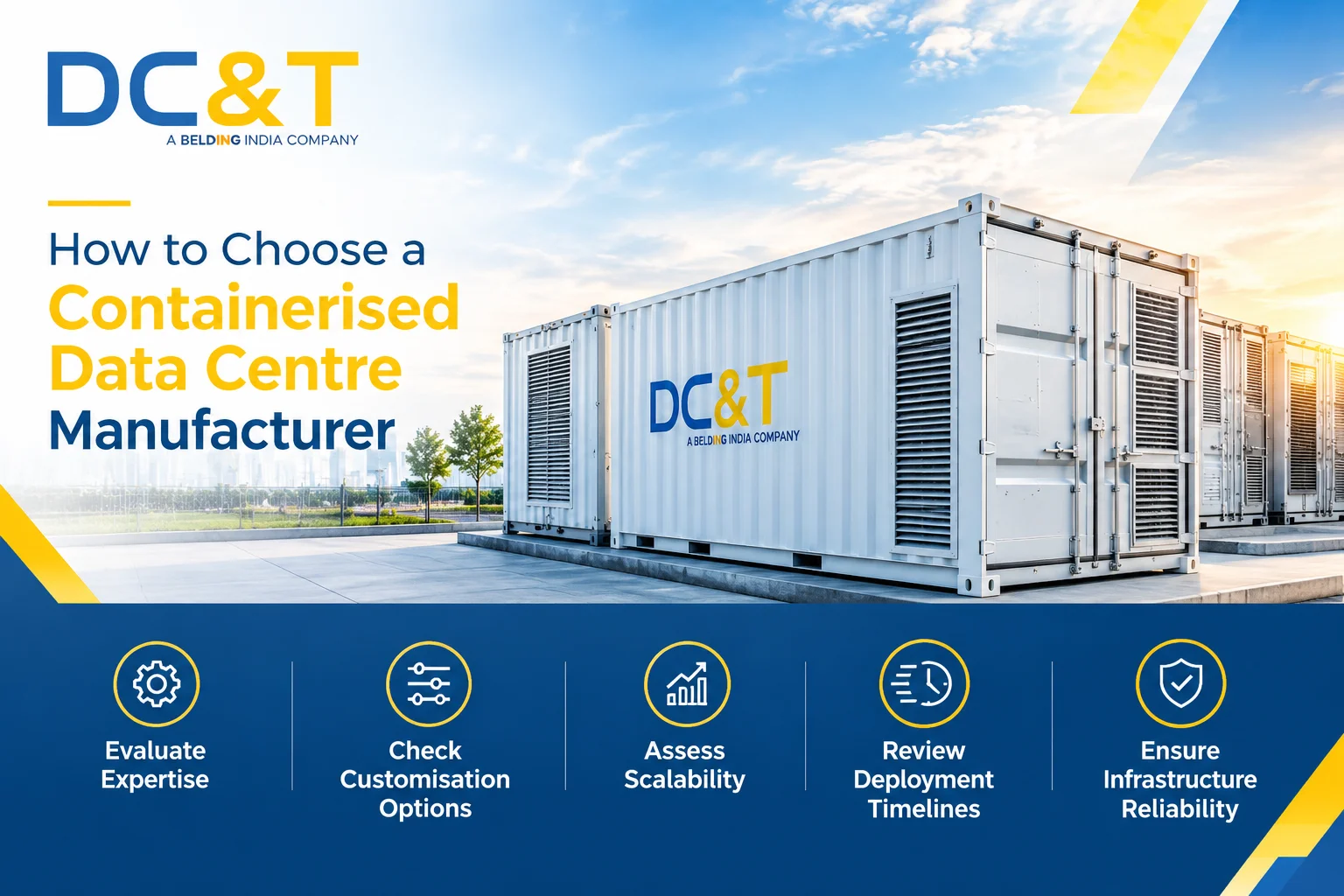
The growing demand for edge computing, distributed IT infrastructure and digital services is changing how data centres are designed and deployed. Businesses increasingly require infrastructure that can be manufactured, transported and installed according to specific project requirements.
This has increased the importance of OEM Data Centre Manufacturing, particularly for companies developing and supplying containerised data centre solutions.
A containerised data centre involves more than manufacturing a metal enclosure. It requires careful engineering of structural components, equipment layouts, electrical systems, cooling arrangements, fire detection and other supporting infrastructure.
For solution providers, selecting the right manufacturing partner can directly influence product quality, integration, production consistency and delivery schedules.
So, what should businesses evaluate when choosing a Containerised Data Centre Manufacturer?
1. Evaluate Manufacturing Infrastructure and Production Capacity
The first consideration should be the manufacturer’s actual production infrastructure.
A manufacturing partner should have the facilities, equipment and production processes required to handle the complete manufacturing scope defined for the project.
This includes evaluating:
- Manufacturing floor space and production layout
- Fabrication machinery and processing capabilities
- Welding and structural assembly facilities
- Electrical and mechanical assembly areas
- Material handling and storage arrangements
- Testing and inspection facilities
- Available production capacity
Manufacturing infrastructure also determines how effectively different production activities can be coordinated.
For example, a project involving multiple container units may require structural fabrication, equipment mounting, electrical assembly, and system integration to progress in a planned sequence.
A manufacturer with appropriate facilities and production planning can support these activities within a coordinated manufacturing process.
What to ask: Does the prefabricated data centre manufacturer have sufficient infrastructure and production capacity to meet the project’s specifications and expected volumes?
2. Check Container Fabrication Capabilities
The container structure forms the physical foundation of the entire data centre system.
Its design and fabrication must account for the equipment it will accommodate, environmental conditions, transportation requirements and installation arrangements.
When evaluating a manufacturer, examine its capabilities across:
- Structural steel fabrication
- Sheet metal processing
- Cutting, bending and welding
- Door and access panel fabrication
- Flooring and structural reinforcement
- Surface treatment and protective coatings
- Equipment mounting arrangements
- Cable entry and routing provisions
The enclosure must also accommodate the intended equipment layout while providing suitable access for installation, inspection and maintenance.
Dimensions, structural loading, ventilation openings, environmental protection and lifting provisions should be established during engineering.
A container designed for a particular project may require different structural and fabrication specifications from one intended for another application.
What to ask: Can the prefabricated data centre manufacturer develop container structures according to project-specific dimensions, equipment layouts and operating requirements?
3. Assess Design Engineering and Customisation
Not every containerised data centre follows the same configuration.
Different projects can have different IT loads, rack arrangements, power requirements, cooling systems, environmental conditions and transportation constraints.
This makes engineering and customisation important parts of the manufacturing process.
A capable manufacturing partner should be able to work with approved engineering specifications and translate them into production-ready designs.
Important considerations include:
- Container dimensions and internal layouts
- Equipment placement and mounting
- Structural loading calculations
- Electrical and mechanical interfaces
- Cable routing and containment
- Cooling equipment positioning
- Maintenance access
- Transportation and lifting provisions
Customisation should also account for how individual systems interact within the available space.
For example, installing cooling equipment, racks and electrical panels requires coordination of dimensions, clearances, cable routes and maintenance access.
The objective is to ensure that the manufactured product meets the intended design requirements without creating unnecessary integration challenges.
What to ask: Can the manufacturer accommodate changes in dimensions, layouts, equipment arrangements and system requirements across different projects?
4. Evaluate System Integration Capabilities
A containerised data centre is made up of several interconnected systems.
While some customers may require only container structures, others may expect their OEM partner to manufacture, assemble and integrate multiple components within the enclosure.
Depending on the project scope, these may include:
IT infrastructure
- Server and networking racks
- Equipment mounting structures
- Cable trays and containment
Power infrastructure
- Electrical panels
- Power distribution assemblies
- UPS and battery arrangements
- Internal electrical connections
Cooling infrastructure
- Cooling units
- Air distribution arrangements
- Piping and associated assemblies
- Thermal management components
Safety and monitoring
- Fire detection systems
- Fire suppression arrangements
- Environmental monitoring
- Control and alarm interfaces
The integration process requires coordination between structural, electrical and mechanical requirements.
For instance, cooling equipment must be positioned according to the rack layout and thermal requirements. Similarly, fire detection arrangements must account for the enclosure layout and the equipment installed within it.
A manufacturer capable of handling multiple assembly and integration activities can help reduce the number of separate manufacturing interfaces involved in a project.
What to ask: Can the manufacturer supply only the container structure, or can it also manufacture and integrate the supporting systems required by the customer?
5. Understand Testing and Quality Control Processes
Manufacturing quality cannot be evaluated through visual inspection alone.
A containerised data centre may include multiple structural, electrical and mechanical assemblies. Each requires suitable inspection and testing based on its design and intended function.
Before selecting an OEM partner, understand its quality control and testing infrastructure.
Depending on the manufacturing scope, checks may include:
- Dimensional inspection
- Weld and structural inspection
- Coating and surface finish checks
- Electrical continuity and insulation tests
- Panel and assembly checks
- Cooling equipment inspection
- Fire detection system checks
- Functional verification of integrated systems
Factory Acceptance Testing (FAT) is another important consideration.
FAT involves testing specified equipment or assemblies at the manufacturing facility before dispatch. It helps verify whether the supplied product meets agreed design and functional requirements.
However, factory testing and final site commissioning serve different purposes. Connections to site utilities, inter-module interfaces and overall system performance may require additional testing after installation.
A prefabricated data centre manufacturer should therefore maintain appropriate inspection records, test documentation and product traceability.
International quality and product standards can also provide useful reference points. However, compliance requirements must be evaluated according to the product category, project specification and applicable regulations.
What to ask: Which inspections and tests are performed at the manufacturing facility, and what documentation is provided before dispatch?
6. Assess Bulk Production and Repeatability
For companies supplying containerised data centre solutions across multiple projects, manufacturing capacity is an important consideration.
A single customised unit and a production requirement involving several units can present very different manufacturing challenges.
Bulk production requires coordination across material procurement, fabrication, assembly, quality control and dispatch.
The manufacturer should be able to establish production processes that support:
- Repeatable fabrication specifications
- Consistent material quality
- Standardised assembly procedures
- Controlled production schedules
- Inspection at defined manufacturing stages
- Consistent product configurations
- Coordination of multiple units
Repeatability is particularly important when the same product configuration is required across different deployment locations.
It allows the manufacturer to work from established engineering specifications while accommodating approved project-specific modifications.
For OEM customers, this can support more predictable production planning and reduce variations between manufactured units.
What to ask: Can the manufacturer handle recurring and bulk production requirements while maintaining consistent specifications and quality checks?
7. Consider Material Sourcing and Supply Chain Management
The availability and quality of materials can influence manufacturing schedules and final product consistency.
A manufacturer should have a defined approach to sourcing, receiving, inspecting and managing materials used in production.
For containerised data centre manufacturing, this may involve:
- Structural steel and sheet metal
- Electrical components
- Cooling equipment
- Racks and mounting systems
- Cable management components
- Fire detection equipment
- Insulation and protective materials
- Hardware and assembly accessories
The supply chain also needs to account for customer-approved specifications and component compatibility.
For example, if a project requires a particular cooling configuration or electrical assembly, the manufacturer must coordinate the relevant components with the enclosure design and integration schedule.
Material traceability and incoming inspection can help maintain control over the production process.
What to ask: How does the manufacturer manage material sourcing, incoming quality checks and component availability for bulk orders?
8. Review Manufacturing Timelines and Delivery Coordination
Manufacturing timelines depend on several interconnected activities.
These include design approval, material procurement, fabrication, assembly, integration, testing and final dispatch.
A manufacturer should be able to explain how these activities are scheduled and monitored.
Important factors include:
- Engineering and drawing approval
- Procurement lead times
- Production planning
- Fabrication and assembly schedules
- Testing and inspection stages
- Dispatch readiness
- Transportation coordination
Changes in customer specifications can also affect production schedules. Therefore, the process for managing design revisions and approval cycles should be established early.
For larger orders, production planning becomes particularly important because multiple units may need to be manufactured, inspected and dispatched in a defined sequence.
What to ask: Does the manufacturer provide a clear production schedule covering engineering approval, fabrication, assembly, testing and dispatch?
9. Check Custom OEM Manufacturing Support
OEM manufacturing involves producing components or complete products according to another company’s specifications and requirements.
In the containerised data centre sector, the OEM relationship can extend beyond manufacturing the outer enclosure.
A solution provider may require a partner to manufacture:
- Complete container structures
- Equipment enclosures
- Integrated electrical assemblies
- Rack systems
- Cooling arrangements
- Fire detection assemblies
- Other project-specific components
The manufacturing scope can therefore range from individual components to complete assembled products.
This makes it important to clarify ownership of engineering drawings, product specifications, approved components, quality requirements and design changes.
An effective OEM relationship should also establish how confidentiality, intellectual property, production approvals and product revisions will be managed.
What to ask: Can the manufacturer work to customer-owned designs and specifications while supporting customised production and repeat orders?
10. Evaluate Long-Term Manufacturing Capability
Selecting an OEM partner should involve more than evaluating the requirements of one project.
As solution providers expand their offerings, they may require different container dimensions, additional equipment configurations, higher production volumes or new product assemblies.
A manufacturing partner should have the infrastructure and engineering processes to accommodate evolving requirements within its agreed capabilities.
Evaluate its ability to support:
- New container configurations
- Changes in structural specifications
- Additional integrated systems
- Different equipment arrangements
- Repeat production orders
- Higher manufacturing volumes
- Product modifications and engineering revisions
A long-term manufacturing relationship can help solution providers establish consistent production processes as their product portfolios develop.
The objective is to identify a partner whose manufacturing infrastructure and capabilities can support both current orders and future requirements.
DC&T Global: OEM Manufacturing for Containerised Data Centre Solutions
For companies developing and supplying containerised data centre products, manufacturing capability is an important part of the delivery process.
DC&T Global supports this requirement through its OEM manufacturing capabilities, bringing together container fabrication, assembly, testing and integrated product manufacturing.
Its 9-acre manufacturing facility at Khed, Pune, brings manufacturing, assembly and testing infrastructure together within one campus.
The facility is designed to support manufacturing operations across different stages of production, from container fabrication to the assembly of products incorporating supporting systems.
1. Advanced Fabrication Infrastructure
Container manufacturing requires fabrication processes that can accommodate structural requirements, dimensions and customer-specific specifications.
DC&T Global’s manufacturing infrastructure includes advanced fabrication lines for manufacturing operations.
These capabilities support the production of container structures and associated components according to approved engineering requirements.
2. Assembly and System Integration
The manufacturing scope can extend beyond the container structure.
Depending on customer specifications, products can incorporate supporting systems such as:
- IT racks and equipment mounting structures
- Cooling systems
- Fire detection systems
- Electrical panels and distribution assemblies
- Cable management and containment
- Other project-specific components
This allows manufacturing requirements to cover individual products as well as assemblies with integrated systems.
3. Testing Infrastructure
Testing is an important part of manufacturing and assembly.
DC&T Global’s facility brings testing infrastructure together with its manufacturing and assembly operations to support relevant inspection and testing requirements.
The applicable checks depend on the product, customer specification and agreed scope of work.
4. Customisation and Bulk Volume Production
Different solution providers may have different product configurations, dimensions and integration requirements.
DC&T Global’s OEM manufacturing approach supports customisation according to customer specifications, along with bulk volume production requirements.
Its manufacturing scope can extend from container fabrication to the production and assembly of products incorporating systems such as cooling, racks and fire detection.
Manufacturing Capability Under One Campus
By bringing fabrication, assembly and testing infrastructure together within its 9-acre manufacturing facility at Khed, Pune, DC&T Global supports a coordinated approach to OEM production.
For containerised data centre solution providers, this offers a manufacturing partner that can work across container structures, associated products and integrated assemblies according to defined project requirements.
Conclusion
Choosing the right OEM manufacturing partner involves evaluating much more than fabrication equipment or available factory space.
Manufacturing infrastructure, engineering support, customisation, system integration, testing, material management and production capacity all contribute to the final product.
For companies supplying containerised data centre solutions, these capabilities become particularly important when products involve multiple integrated systems or recurring production requirements.
A manufacturing partner should be able to translate approved specifications into products that meet defined structural, electrical, mechanical and quality requirements.
With its 9-acre manufacturing facility at Khed, Pune, DC&T Global brings together advanced fabrication, assembly and testing infrastructure to support OEM manufacturing requirements.
From container fabrication to integrated product manufacturing, the focus is on building the manufacturing capability that solution providers can rely on for customised and bulk production requirements.
Frequently Asked Questions
1. What does a containerised data centre manufacturer do?
A containerised data centre manufacturer produces the physical enclosure and, depending on the agreed scope, assembles supporting infrastructure such as racks, electrical systems, cooling and fire detection. Manufacturing may range from individual components to integrated products.
2. What is OEM data centre manufacturing?
OEM data centre manufacturing involves producing containers, equipment enclosures, assemblies or integrated products according to another company’s engineering specifications and requirements. The OEM partner manufactures the products, while the customer supplies or markets them under its own offering.
3. What should businesses check before selecting an OEM manufacturer?
Businesses should evaluate fabrication facilities, engineering capabilities, material sourcing, assembly infrastructure, testing processes, customisation options and bulk production capacity. They should also establish product specifications, quality requirements and responsibilities before production begins.
4. What systems can be integrated into a containerised data centre?
Depending on the project, integrated systems may include IT racks, UPS, electrical panels, power distribution, cooling equipment, fire detection, fire suppression, cable management and environmental monitoring. The final configuration depends on the intended application and engineering requirements.
5. Why is factory testing important in data centre manufacturing?
Factory testing helps verify that manufactured components and assemblies meet defined design and functional requirements before dispatch. It can identify defects or integration issues earlier, reducing the likelihood of avoidable corrections during site installation.
6. Can an OEM manufacturer customise container dimensions and internal layouts?
Yes. OEM manufacturers can develop container structures and internal arrangements according to approved customer specifications. Customisation may cover dimensions, structural requirements, equipment placement, cooling arrangements, electrical interfaces and access provisions.
7. Why is bulk production capacity important for containerised data centre projects?
Bulk production capacity helps manufacturers coordinate recurring orders and multiple units through planned fabrication, assembly and inspection processes. It is particularly relevant for solution providers supplying similar configurations across several projects or deployment locations.
8. What OEM manufacturing capabilities does DC&T Global offer?
DC&T Global offers OEM manufacturing capabilities through its 9-acre facility at Khed, Pune. Its manufacturing scope includes container fabrication, advanced fabrication lines, assembly, testing, customisation and production of integrated products according to customer requirements.
Sources
- UL Solutions / ANSI Webstore – UL 2755: Outline of Investigation for Prefabricated Modular Data Centre Systems and Related Modular Units
- ISO – ISO 9001: Quality Management Systems
- ISO – ISO 9001 Explained
- ISO – ISO/IEC 22237-2:2024: Data Centre Facilities and Infrastructures – Building Construction
- ASHRAE – Commissioning and Performance Validation
- Telecommunications Industry Association – TIA-942 Data Centre Infrastructure Standard